CASE STUDY
Steering away from a costly redesign.
A rapid research sprint that redirected an executive-led full redesign into a targeted, prioritized roadmap without breaking what was working.
ROLE
UX Research Lead
FOCUS
Discovery research · Strategy facilitation
DOMAIN
Salesforce DevOps + Data backup
STATUS
Delivered
THE GOAL
Making a complex product easier to sell.
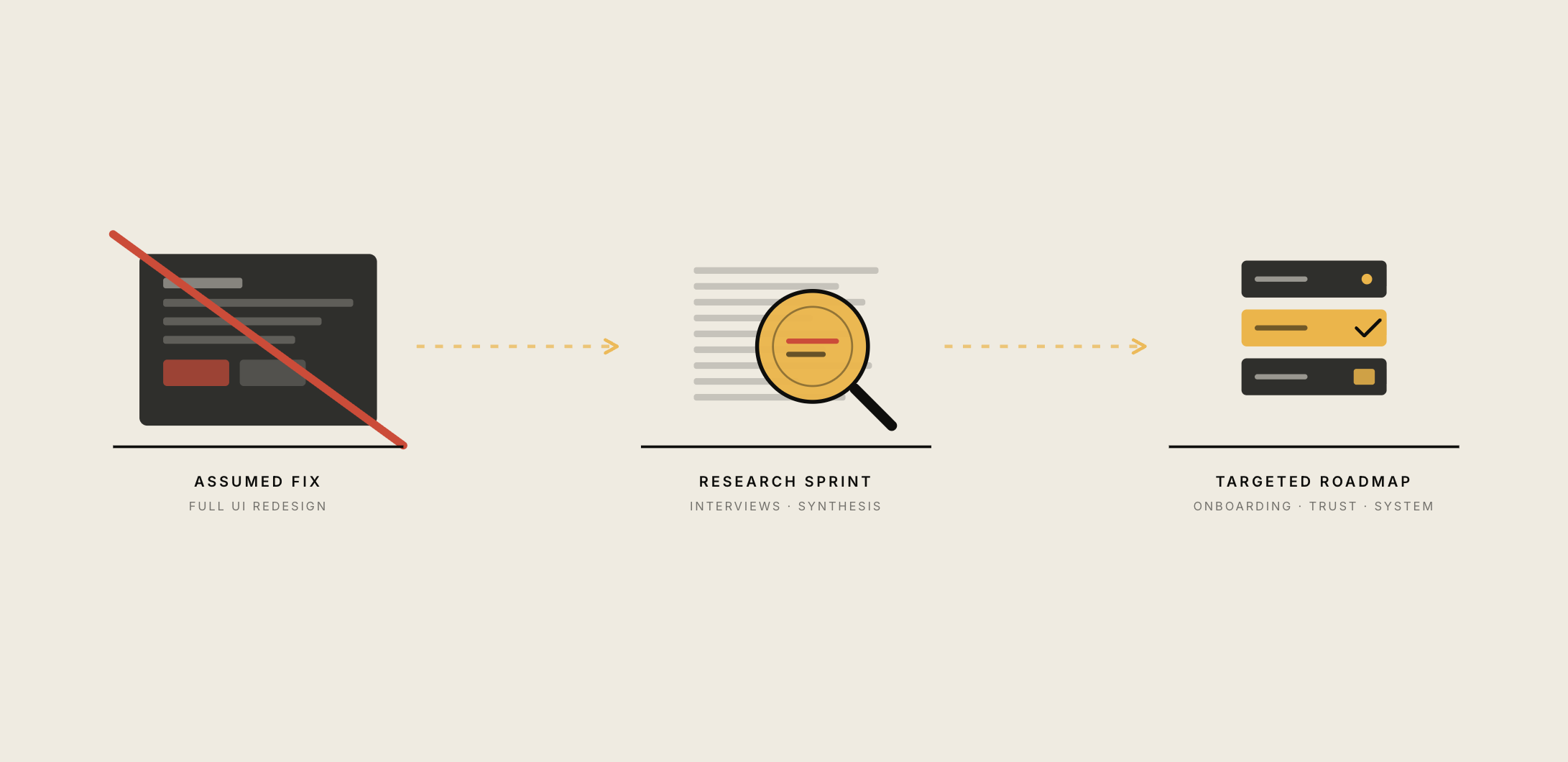
The client was a DevOps and data backup platform built for Salesforce. Their goal was straightforward: increase sales and user adoption. They wanted to overhaul the product's UX and UI, convinced a more visually striking interface would help potential buyers quickly grasp the product's value.
Before we jumped into design work, I wanted to understand what buyers were seeing during sales demos, and where the disconnect was happening.
THE CONFLICTING SIGNAL
The product wasn't broken, but buyers couldn't see the value.
Early research turned up a massive contradiction. The platform had an unheard of 4.97 average rating across 272 reviews on the Salesforce AppExchange. Users loved the platform! A blind visual overhaul risked alienating the loyal user base without actually fixing the sales pipeline.
The gap was specific: the product worked beautifully for everyday users, but sales presentations were dropping the ball for prospective buyers. I presented these findings to leadership and requested to pause the design phase for two weeks to dig deeper.
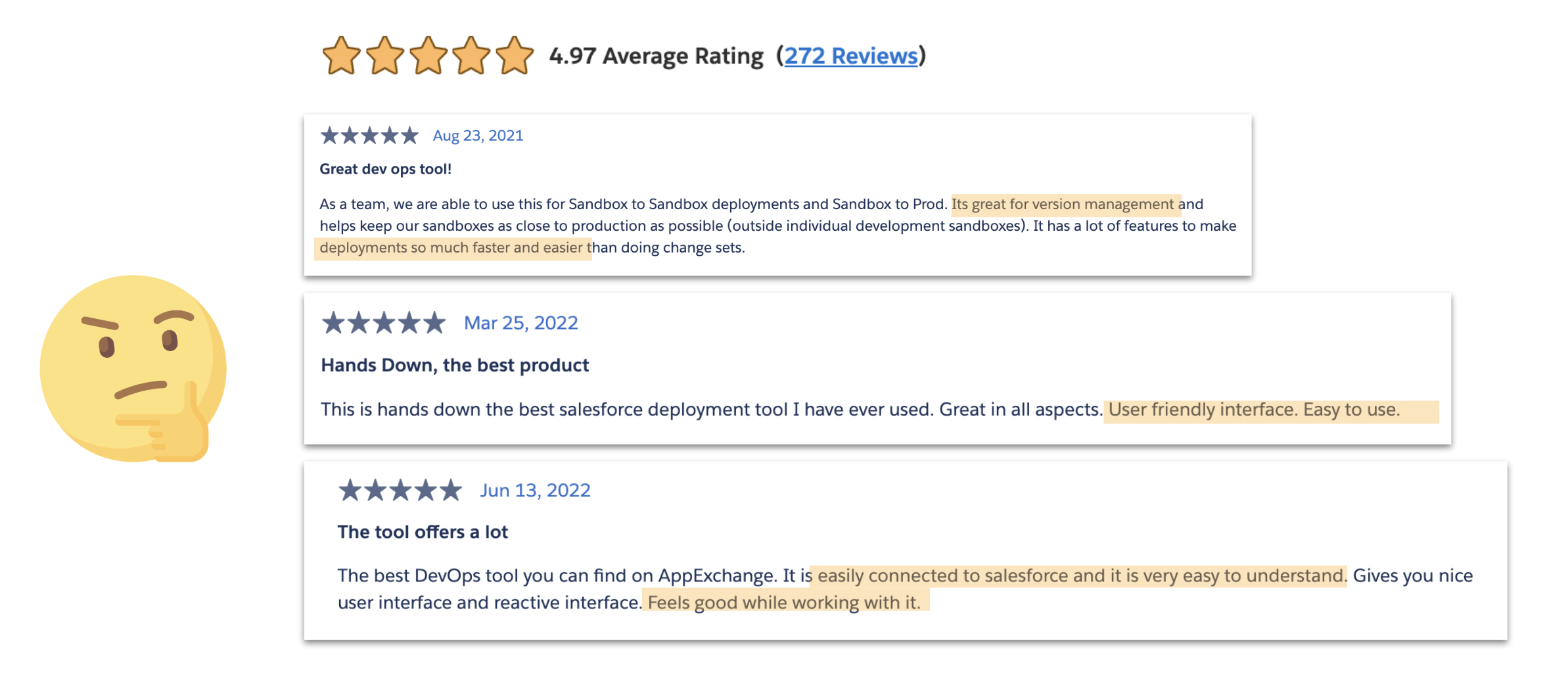
Sample reviews from the AppExchange: a 4.97 rating across 272 reviews that reframed the whole engagement.
TEAM DYNAMIC
Aligning the team on a common goal
As the UX Research Lead, my job was to pivot our focus toward what would actually help the sales team close deals. I advocated for a quick discovery phase so we could look at the data before rewriting the UI.
The Product Owner and Solutions Architect joined the interviews and helped design the surveys, which was crucial for translating dense technical feedback. We reviewed the results together in daily syncs to lock in the main themes.
WHAT I OWNED
Mixed-methods research design across three user groups
Participant recruiting and user interviews
Thematic synthesis of findings
Two collaborative whiteboard workshops with the client
Executive findings readout and prioritization
Contributions to the DevOps Discovery Roadmap for future engagements
WHO I WORKED WITH
Client CEO and executive team
Product Owner and Solutions Architect (survey + interview design)
Admins and DevOps managers (research participants)
Developers and end users (research participants)
Release managers and buying-decision influencers
THE RESEARCH APPROACH
Three audiences, two weeks.
I ran exploratory research across the three groups that shape adoption: admins and DevOps managers, developers and end users, and the managers who make the buying decisions. We wanted to know what was confusing for each group, what they valued most, and what prospective customers looked for during sales presentations.
In parallel, I ran two whiteboard workshops with the client to sketch iterations on the current interface. This gave us a baseline for future design work while the research wrapped up.
The process was fast: initial findings were in the client’s hands within a week.
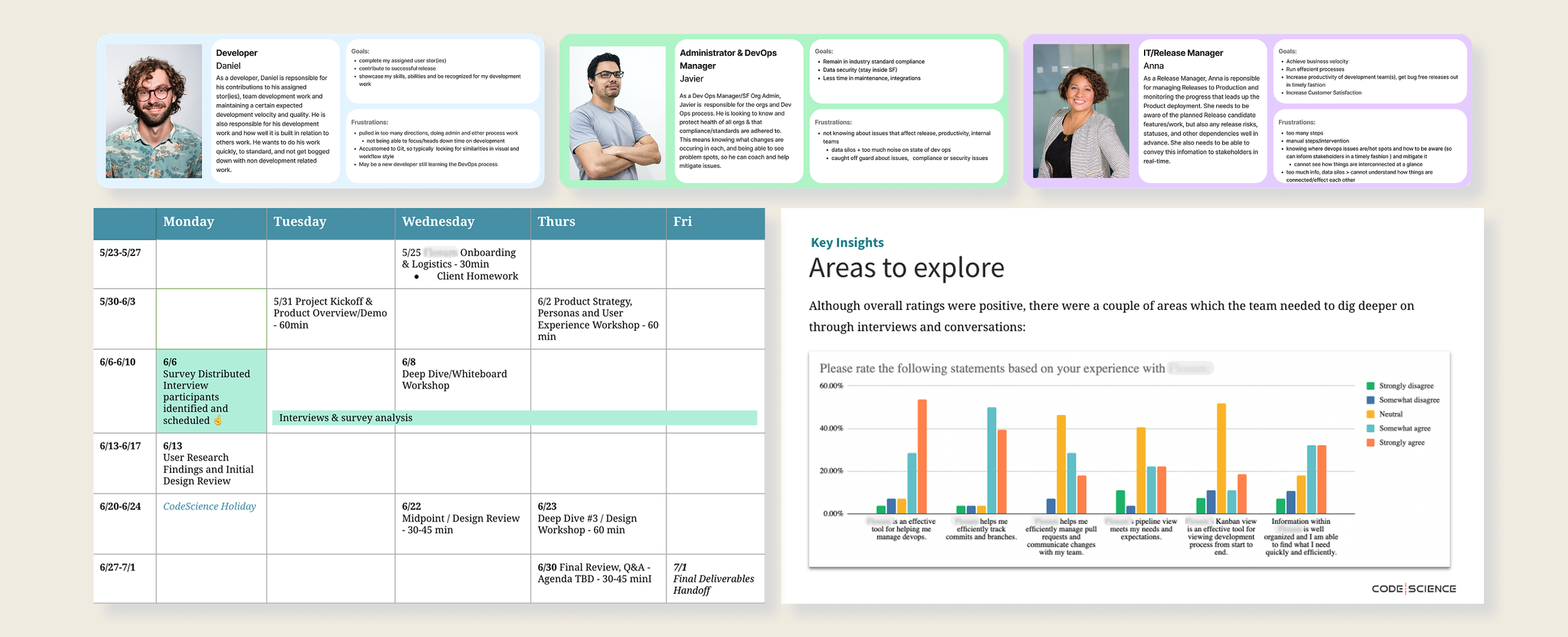
Personas across the three audiences, the two-week research calendar, and survey results
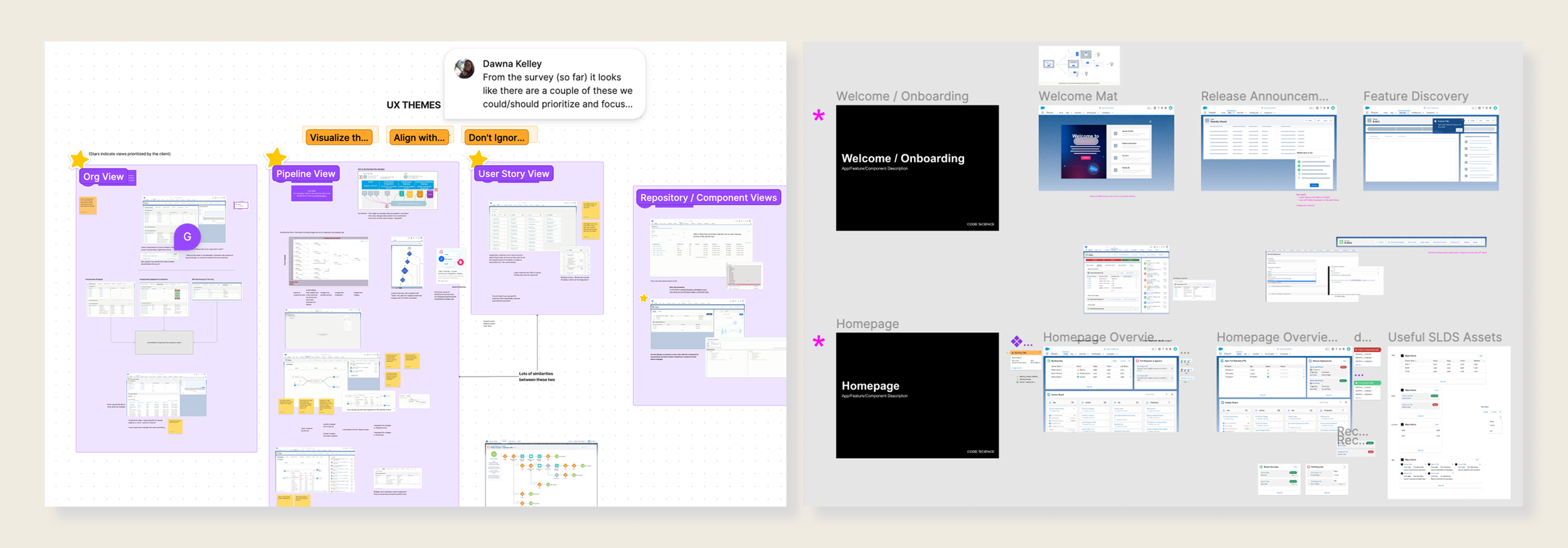
Parallel processes during the research phase, including a collaborative whiteboard workshop with client and ongoing iterative design that incorporated our learnings in real time.
THE FINDINGS
One through-thread.
The research surfaced friction across the experience, including themes of consistency, simplicity, and better workflows. But one insight tied them all together.
Users didn't want new features or more functionality. They wanted a better experience with what they already had.
WHAT USERS ACTUALLY ASKED FOR
Managing stories from a high level and clearly communicating changes
Better workflow automations and peer-review processes
Consistency and simplicity across the UI
Ongoing in-app guidance and learning resources
"This is a huge win already. We had a lot of trees without showing the forest."
-Client CEO
PROJECT IMPACT
Protecting Retention & Product Strategy
Understanding the user redirected the client's product strategy and protected them from a multi-month visual overhaul that carried a real risk of veteran user churn.
IMPACT 01
Exponential value for the client
The client was upfront that they had no internal product team. We filled that gap and showed them how to build based on user data instead of assumptions. Several insights pointed to quick wins that improved their entire product suite, not just the platform we started with.
IMPACT 02
Permission to pivot
Even though the initial research pulled us deep into technical user workflows, the findings gave the client exactly what they needed: proof that a top-to-bottom UI overhaul was not the answer. It gave leadership the confidence to stop the redesign and re-evaluate how they talk to buyers.
IMPACT 03
Better preparation for future engagements
Multiple rounds of prioritization with the client produced a clear direction and saved time down the line. The extra runway let us hand off a DevOps Discovery Roadmap — actionable next steps for designers, POs, and the sales team to get ahead on client priorities and user findings.
"I'm already implementing some of the flows and in-app guidance on existing things… I think we can use this across all of our products."
-Client CEO
KEEP EXPLORING