CASE STUDY
Building a high school to leadership pipeline.
Leading the design and delivery of Be The Change: Careers In Health, a 16-week blended course that introduces high schoolers from to healthcare leadership.
ROLE
LX Designer · Product & Project Lead
FOCUS
Curriculum design · End-to-end delivery
DOMAIN
Healthcare careers education
STATUS
Launched
Users share their experience, then see an AI analysis of their street.
THE GOAL
Reach students as they are considering their futures
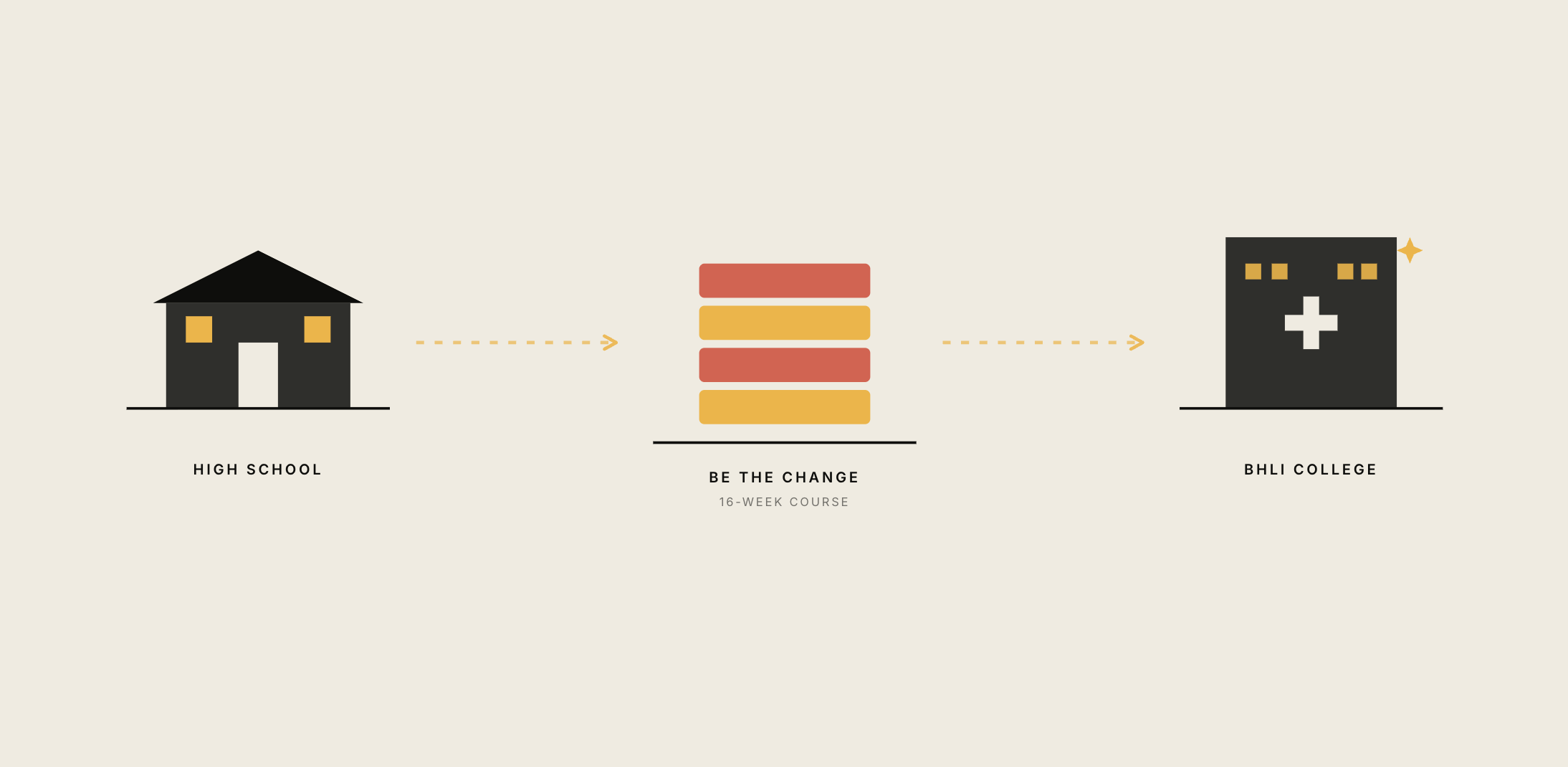
Our goal was to build an on ramp for the Bluford Healthcare Leadership Institute (BHLI) already successful college program. The college program prepared students for executive roles in healthcare, and BHLI wanted to expand the program to reach kids in high school, sparking an interest in healthcare leadership as students were considering their future paths.
We designed a new 16-week hybrid course called Be The Change: Careers In Health. It introduces high schoolers to fields like healthcare administration, public policy, and finance. BHLI had deep subject matter expertise, but they lacked the instructional framework and the software tools to run a course that worked in a classroom and online at the same time.
The pilot was launching in two Kansas City high schools, with plans to expand nationally. Everything we built had to be scalable from day one.
The 16-week course was created using principles of backwards design: outcomes first, then assessments, then the experiential modules built to meet them.
TEAM DYNAMIC
One role across design, product, and project.
As Learning Experience Designer, my role stretched across learning design, product management and project management.
I kept all of threads moving in the same direction on a rolling schedule by leading a cross-functional team of content writers, graphic designers, and engineers, while coordinating with BHLI's subject-matter experts and course facilitators.
I oversaw every piece end to end, including product research, user testing, leading the facilitator guide and graphics, and building the course's home in Canvas.
WHAT I LED
End-to-end ownership as LX designer, product manager, and project manager
Foundational student research and interviews
Course architecture, including reflection journal and two capstone projects
Managing a rolling per-topic design and testing cycle across 20+ activities
SME workshops and collaborative lesson creation
Building activities in learning tools, including Canvas
Facilitator collaboration and the facilitator guide
WHO I WORKED WITH
Content Team
Graphic design and illustration teams
Student testers
BHLI subject matter experts
Course facilitators
STARTING WITH THE STUDENTS
The shape of the course came from the students themselves.
The first step was to understand the people we were designing for. I ran multiple student interviews to learn what they look for when choosing a career, what they needed to know, and what makes a subject feel interesting rather than required.
Those conversations shaped the bones of the course, including classroom activities, async coursework, a reflection journal, and two capstone projects that gave students a chance to start practicing professional skills.
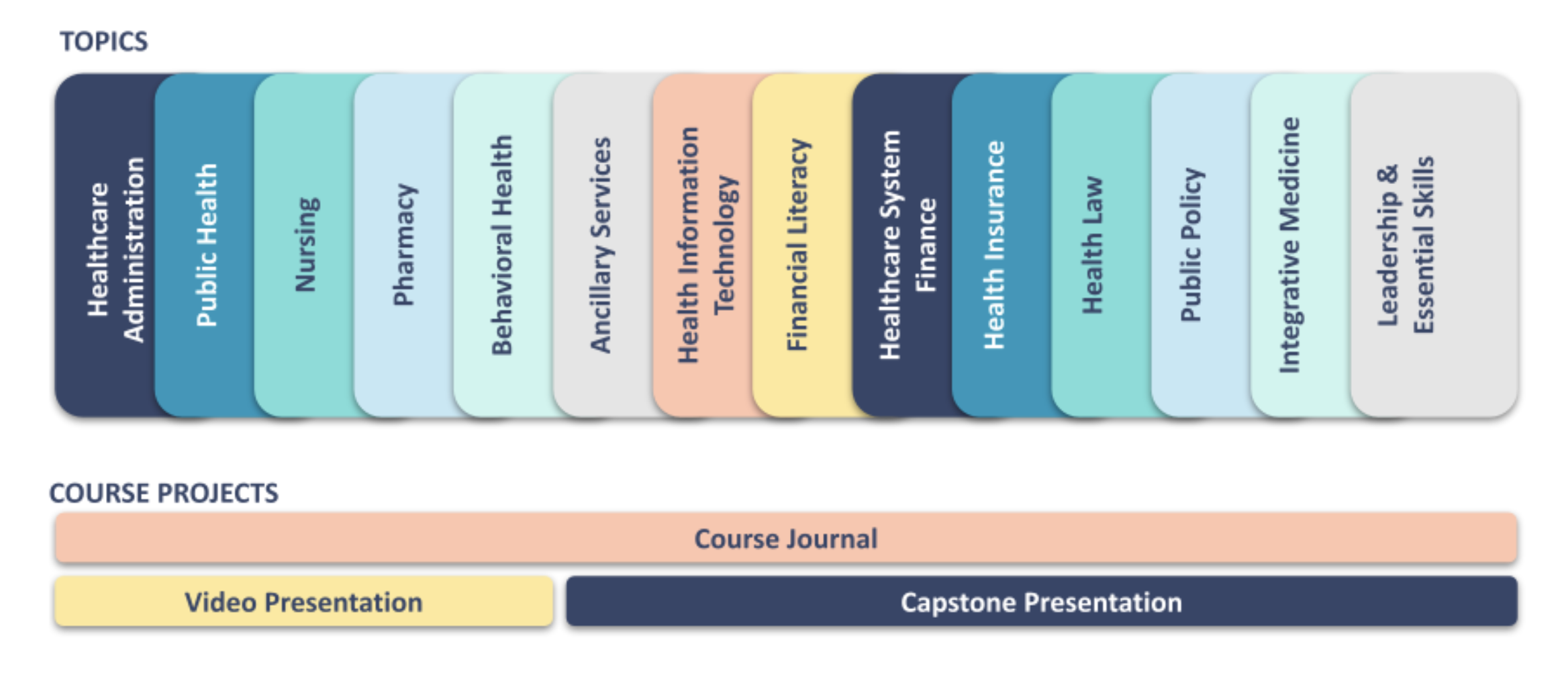
The 16-week structure built from student research, including a reflection journal and two capstone projects.
THE ROLLING BUILD
One topic a week, designed and tested on a loop.
Each week of the course was designed to cover one topic. Our team designed and built the learning materials for each topic on a rolling cycle that produced 27 distinct activities.
STEP 01
SME interview
Each topic started with an interview of a subject-matter expert, with the content team in the room so nothing was lost in translation.
STEP 02
Collaborative lesson creation
We built each lesson around what we learned from the SME, choosing the format that fit the topic best. Sometimes research, sometimes interactive, sometimes a classroom game.
STEP 03
Test with students, then iterate
Every lesson was tested with students and refined. The schedule was rolling: while one topic was in testing, we were usually already interviewing the SME for the next.
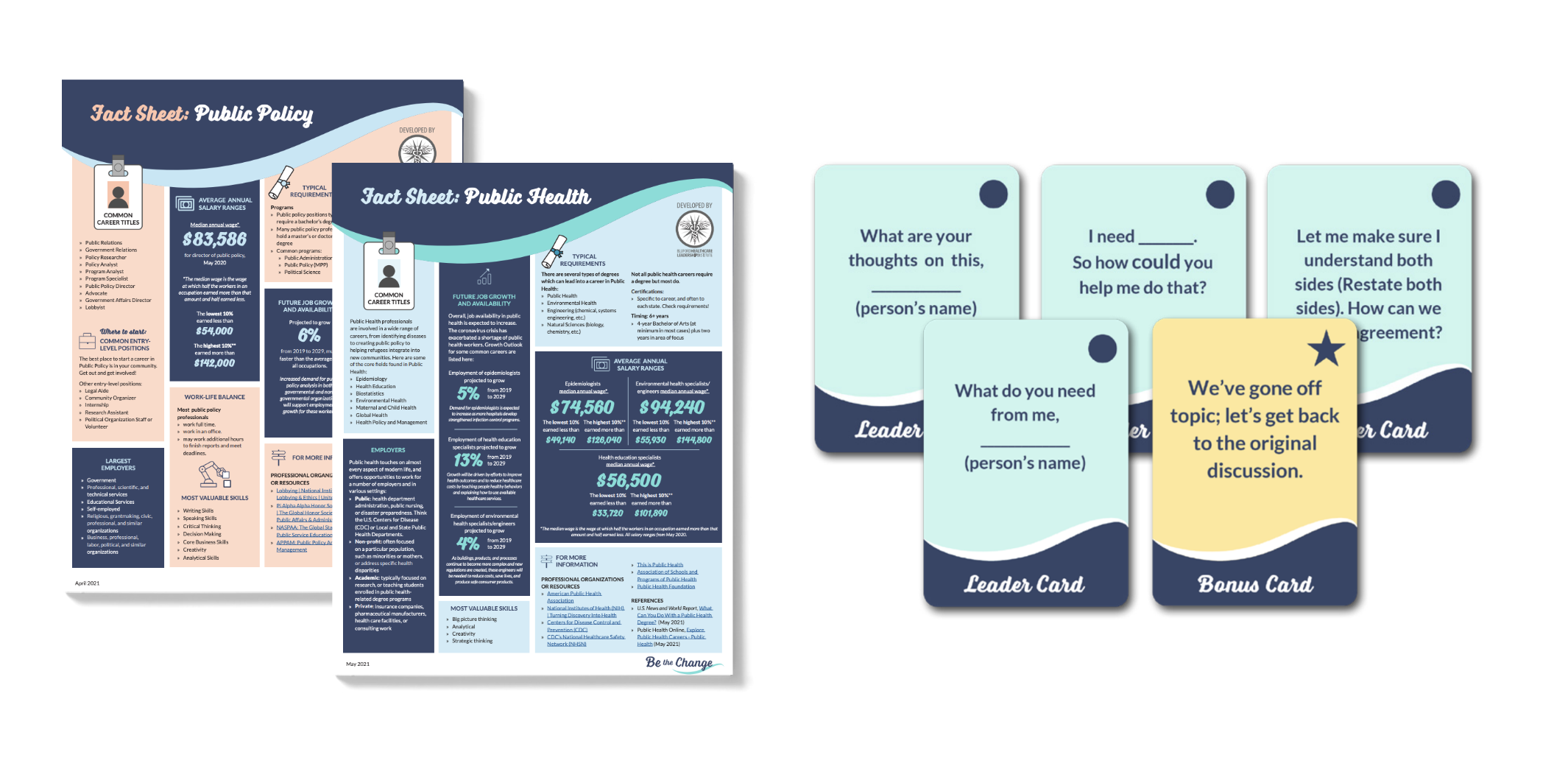
A sampling of the 27 activities including fact sheets and classroom games.
DESIGNING FOR THE FACILITATORS
Working with Course Faciitators
Throughout the build, we worked closely with the course facilitators to get their feedback on how easy or hard each lesson would be to administer, how they thought it would land with students, and what they'd need to know to deliver the content.
That feedback became a facilitator guide with instructions for every lesson. We tested the guide with the facilitators so the course could run smoothly in any classroom, whether the course was taught in person or online.
PROJECT IMPACT
Full enrollment and a measurable pipeline.
The course hit full enrollment within days of the initial announcement. Multiple students who completed the high school course transitioned directly into BHLI's college-level leadership programs. That was the pipeline BHLI had set out to build.
KEEP EXPLORING